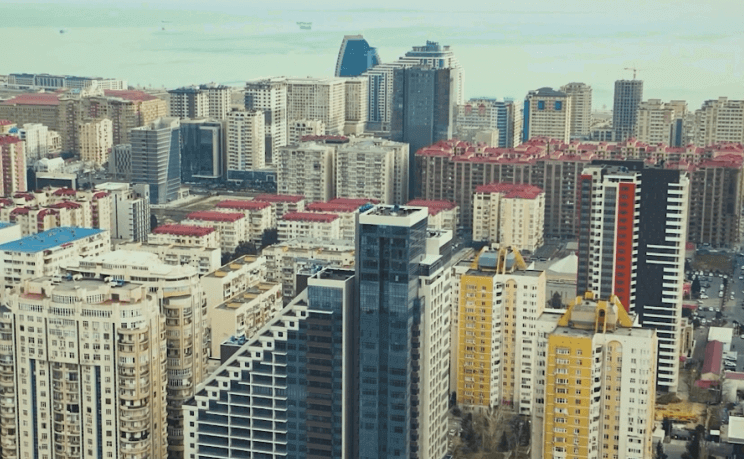
Apartment prices in Baku continue to climb at a pace that has stunned both buyers and analysts.
Over the past year alone, the cost of new and secondhand housing has jumped by 20–30 percent, with similar increases recorded in private homes, land plots and commercial real estate. The steepest price growth has been observed in the Narimanov, Nasimi and Yasamal districts.
The key question for buyers now is simple: how much higher can prices go?
Investment Appetite Driving Demand
Real estate expert Agshin Akhundov says the surge is closely tied to the investment habits of Azerbaijani citizens.
“For our people, real estate remains the safest way to preserve capital. When someone has spare money, the instinct is to buy an apartment – even if it’s not needed for living,” Akhundov explains.
He adds that changes in urban planning and construction norms have reshaped the market.
“Previously, developers maximized land use, building 3-4 blocks on a single hectare – often cutting corners on facades or engineering systems. Now regulations are stricter: only two blocks are allowed on that same hectare. The rest must be allocated to playgrounds, recreational zones and public spaces. With fewer apartments per project, prices naturally rise.”
Primary Market Dictates the Entire Market
Another real estate analyst, Ramil Osmanli, argues that the primary market is the main force setting prices – and not because of market competition.
“At the moment, pricing is driven by investors and developers, not by market fundamentals,” Osmanli says.
He notes that unjustified price hikes in new buildings rapidly spill over into the secondary market.
“Owners of older apartments are essentially future buyers of new buildings. When they sell at a higher price, they enter the primary market with more cash – and this fuels further price increases.”
When Will the Market Stabilize?
Experts agree on one point: not anytime soon. The combination of strong investment demand, limited supply in high-density districts and buyer activity makes price stabilization unlikely in the near future.