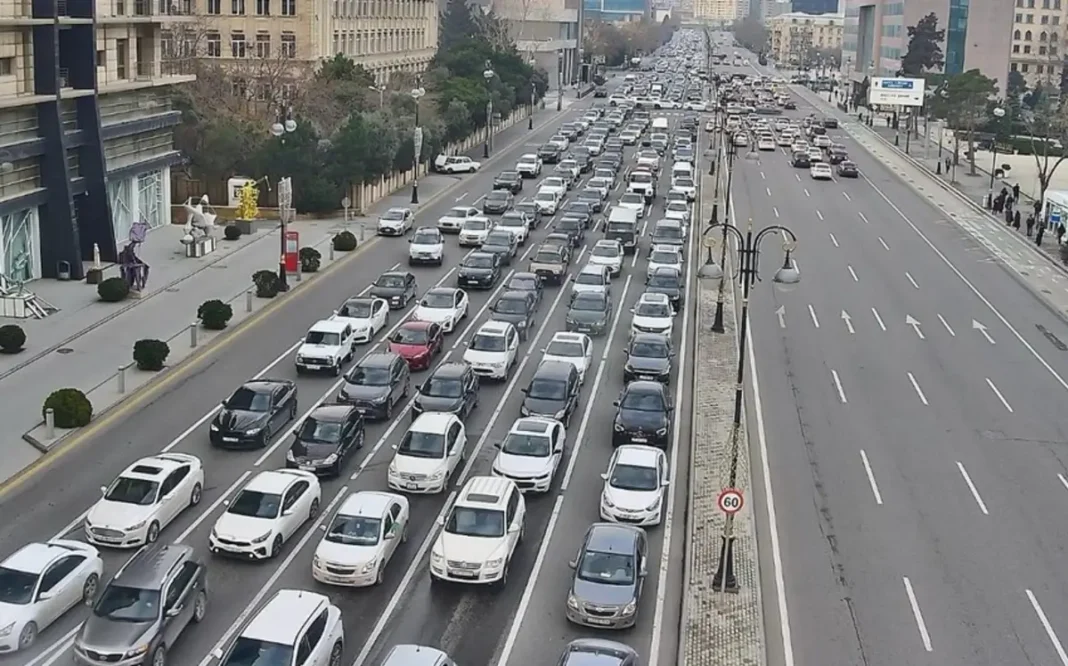
Baku’s traffic congestion has become a daily reality for hundreds of thousands of residents. Whether morning or evening, weekday or weekend, gridlock is now an entrenched part of city life – slowing commutes, increasing transport costs, and straining public patience.
Transport expert Rauf Agamirzayev says the capital is at a critical point and can no longer rely on patchwork solutions. In comments to Patrul.az, he outlined a mix of urgent and long-term reforms needed to prevent the situation from deteriorating further.
Short-Term Fixes Already Showing Results
Agamirzayev notes that some recent measures are producing measurable improvements:
Dedicated bus lanes installed on several major corridors have increased bus speeds and improved timetable reliability.
Micromobility lanes for bicycles, scooters and other small vehicles are beginning to integrate into Baku’s broader road network.
“These changes may seem simple, but they help stabilize the flow of public transport and offer commuters an alternative to private cars,” he explained.
Long-Term, High-Cost Reforms Are Unavoidable
While quick fixes help, Agamirzayev stresses that congestion will continue unless deeper structural reforms are launched:
Upgrading pedestrian infrastructure (2025–2030)
A state program envisions:
more pedestrian crossings,
removal of physical barriers,
improved accessibility for people with disabilities,
better-placed bus stops and more same-level crossings.
Smart traffic lights with “green wave” priority for buses, safer islands for pedestrians, contrast lighting, and lane narrowing are also planned to push commuters toward public transport.
Rail and Metro Expansion
Baku’s existing rail network – dating back 145 years – remains a major untapped asset. Expanding it, experts say, could offer a new commuter alternative between central districts and outlying suburbs.
In parallel, a new metro expansion program has been approved. Construction of several new lines and stations is scheduled to begin in 2026, marking the next chapter for the 58-year-old Baku Metro.
Return of the Tram
Agamirzayev insists that a modern tram system is essential for a multimodal transport model. Trams would link different parts of the city and prevent vehicle flows from converging into bottlenecks.
Illegal Parking Is a Major Obstacle
One of the most persistent sources of congestion, he says, is illegal parking – especially on sidewalks and pedestrian crossings.
“When cars block sidewalks, they endanger pedestrians and disrupt the entire traffic flow. Enforcement must be strict and uncompromising,” the expert noted.
A New Contracting Model for Public Transport
Agamirzayev also highlighted the future transition to the ‘brut’ service contract model, widely used in European cities. Under this system, the state compensates operators per kilometer driven rather than per passenger.
This change would allow:
buses to operate reliably even late into the evening,
discounted fares for students and pensioners,
the introduction of 90-minute transfer rights between multiple modes of transport.
A Comprehensive Reform Package Is the Only Way Forward
According to Agamirzayev, solving Baku’s traffic crisis requires a coordinated, long-term strategy – not isolated measures.
“Only systemic, sustainable solutions will allow the city to overcome congestion and create a truly modern transport ecosystem,” he concluded.