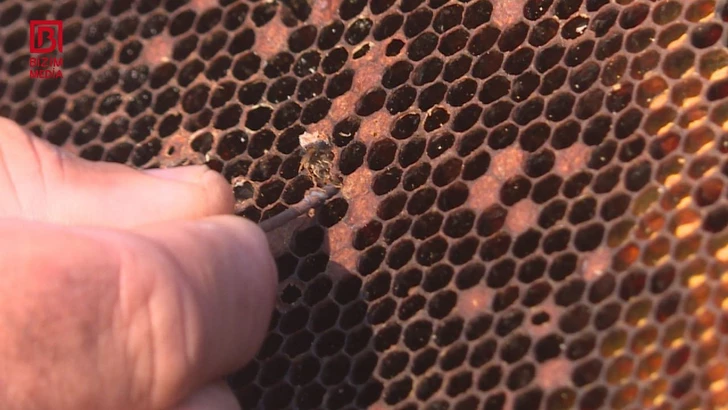
A severe crisis is unfolding in Azerbaijan’s beekeeping industry, with regions such as Zagatala reporting massive losses as widespread disease continues to devastate bee colonies. What began in the summer has now escalated into a full-scale disaster for local beekeepers.
Hundreds of bee families have already died, with infections spreading rapidly and attacks from wild bees compounding the problem. In villages like Daghly and surrounding communities, the situation has grown dire, leaving beekeepers in deep economic distress as attempts to save their hives have largely failed.
One of the starkest examples comes from beekeeper Rafiq Abdullayev, who lost more than 80% of his hives: out of 90 bee families, only 18 survived.
Another beekeeper, Rasim Ilyasov, who has decades of experience, described the early symptoms of the diseases sweeping through colonies.
“The infections are bacteriological and impossible to diagnose without laboratory equipment,” he said. “Only a microscope can identify the precise pathogen and allow us to select the right treatment. The absence of diagnostic labs has left beekeepers helpless — around 70–80% of our bees have died.”
In Daghly alone, some 40 beekeepers previously managed more than 3,000 bee families. Since the spring–summer season began, over 80% of those colonies have perished.
Veteran apiculture expert Mamednabi Gurbanov, who has spent nearly 40 years studying the field, warns that the scale of losses has become “astronomical.” He attributes the crisis to the rapid spread of parasites and viral infections, as well as mistakes by inexperienced beekeepers.
Gurbanov calls for urgent measures:
Comprehensive monitoring of apiaries nationwide
Quarantine zones in affected districts and villages
Mandatory training and certification for new beekeepers
He says that social-support programs that distributed bee families to inexperienced individuals – without training – also contributed to the uncontrolled spread of disease.
Beekeeping is a vital economic sector for Zagatala, where around 2,000 producers operate approximately 40,000 bee colonies. Without immediate intervention, experts warn the region may face long-term losses in honey production and biodiversity.