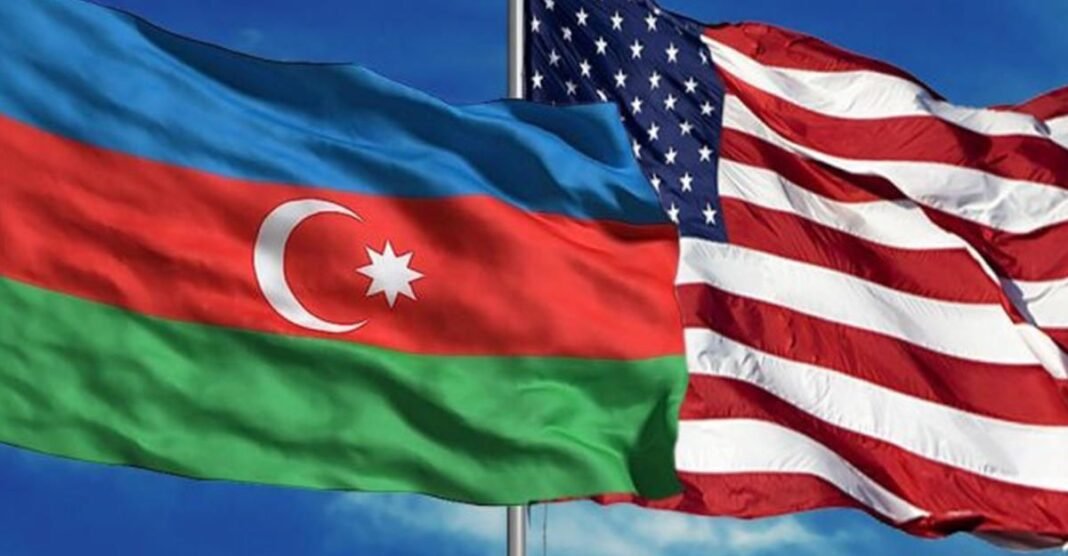
By Azerbaijan.US Editorial Board
In recent months, Washington’s attention toward the South Caucasus has quietly intensified, cutting through global noise dominated by Ukraine, the Middle East, and the Indo-Pacific. While analysts debate the long-term shape of U.S. policy under the new administration, one fact is becoming harder to ignore: the South Caucasus is reemerging as a region of unusually high strategic value – and Azerbaijan is at the center of this shift.
For years, the region sat in a diplomatic “waiting room,” overshadowed by broader U.S.-Russia and U.S.-China competition. Today, however, the calculus is changing. Three developments – energy diversification, rare earth potential, and cross-regional connectivity – have forced policymakers to reassess what’s at stake.
Energy remains the starting point. Europe’s effort to replace Russian gas has turned the Southern Gas Corridor from a technical transport route into a political lifeline. Azerbaijan, already a mature supplier, is not only expanding volumes but emerging as a stable partner with geographic reach that extends far beyond Europe. Few countries possess the same combination of reliability, infrastructure discipline, and geopolitical predictability.
Yet hydrocarbons are only part of the story. The region’s deposits of rare earth elements (REEs) have moved from obscure geological notes into the mainstream of congressional briefings. With China dominating more than 80% of global processing capacity, Washington is casting a wide net for alternative sources – and Azerbaijan consistently appears in analyses of future diversification routes. For U.S. industry planners, this is not a speculative bet; it’s a matter of national security.
The third driver – and arguably the most transformative – is connectivity. The decision to greenlight the Trump Route for International Peace and Prosperity (TRIPP) has reconfigured thinking in Washington more dramatically than any other recent development. Unlike earlier diplomatic frameworks, TRIPP is built not on abstract declarations but on concrete deliverables: rail, fiber, energy, and transit integration that would link markets from the Mediterranean to Central Asia.
For Armenia and Azerbaijan, the agreement signals a rare moment of overlapping interests. For the United States, it signals something larger: a return to strategic infrastructure diplomacy. The idea that the U.S. will play a long-term role in the region – for 99 years, according to the corridor agreement – marks a structural shift in the South Caucasus geopolitical landscape.
Despite political turbulence in Yerevan and occasional pressure from diasporan lobby groups in Washington, U.S. officials increasingly recognize that stability in the South Caucasus is inseparable from long-term American economic and security interests. Azerbaijan’s record of cooperation on counterterrorism, its role in global energy markets, and its geographic position connecting Europe and Asia place it in a category few regional states can match.
If Washington wants a foothold in the Eurasian energy transition, an alternative REE ecosystem, and a viable east-west transport link independent of Russia and Iran, then Azerbaijan is not just a partner – it is an anchor.
As the U.S. recalibrates its priorities in a volatile world, the South Caucasus is no longer a sideshow. It is becoming a strategic corridor of its own – and Azerbaijan stands at the front of that transformation.