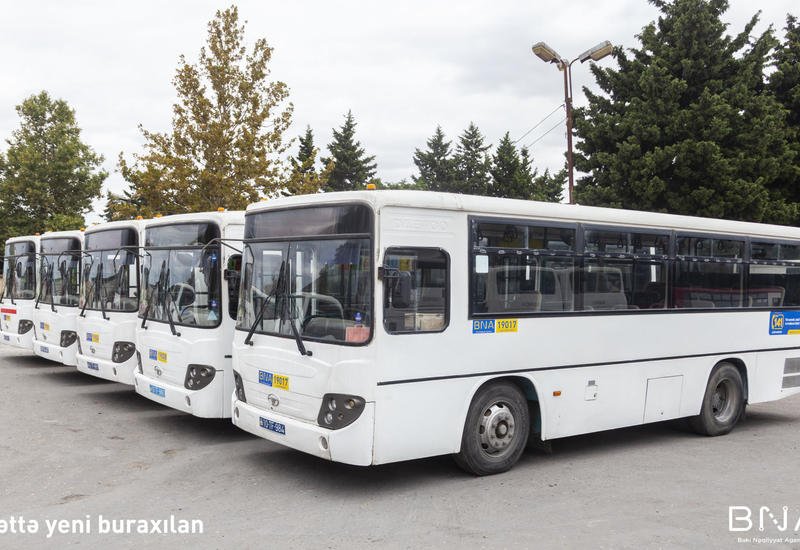
Azerbaijan plans to remove all buses older than 15 years from regular routes starting January 1, 2026, according to a new regulation approved by the Collegium of the Ministry of Digital Development and Transport.
The document – “Requirements for Vehicles Providing Regular Route Services for Contractual Transport Operations” – sets new standards for buses operating on public routes, including:
production year and allowable mileage,
Stay Ahead with Azerbaijan.usGet exclusive translations, top stories, and analysis — straight to your inbox.mandatory cashless payment systems,
passenger-counting devices,
and additional technical criteria.
These requirements will apply to transport operators in Baku, Sumgayit, Ganja, Nakhchivan, Khankendi, as well as the Aghdam, Shusha, Lachin, and Absheron districts.
Experts Question Feasibility
Despite the ambitious nature of the reform, specialists argue that such a sweeping ban cannot realistically be implemented within the proposed timeline.
Speaking to Bizim.Media, Akif Nasirli, chairman of the Center for Liberal Economists, called the deadline “institutionally impossible”:
“If the plan is truly to remove all buses older than 15 years by January 1, 2026, it is impossible to execute – economically, socially, or technically. Most of Azerbaijan’s vehicle fleet is older than 15 years. This decision would affect millions, cause a sharp spike in prices for new and used vehicles, and place a heavy financial burden on middle- and low-income families.”
Nasirli added that government structures would not be able to develop the necessary registration, disposal, and transportation infrastructure in a single year. He also noted that the current public transport network is not yet capable of absorbing such a large transition.
“Globally, similar measures are implemented gradually – over 5-10 years – with phased reductions in vehicle age limits and financial incentives for the population. Implementing this within the stated deadline is practically impossible,” he said.
The ministry has not yet commented on whether the transition period could be extended.

