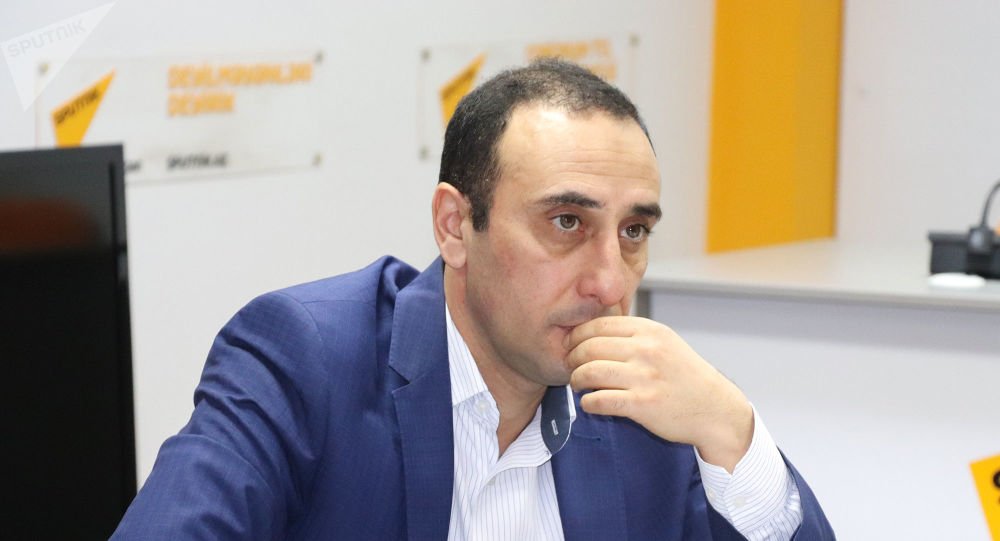
Analyst Rizvan Huseynov said the resumption of rail shipments to Armenia via Azerbaijan signals a new phase in regional connectivity and should be followed by practical steps from Yerevan to open broader communications.
Speaking on the Echo Baku YouTube program, Huseynov, who heads the Center for the History of the Caucasus, framed the week’s developments as an early test of commitments made after the Washington understandings between Baku and Yerevan.
Huseynov described the recent deliveries of wheat to Armenia by rail through Azerbaijani territory – first from Kazakhstan and then from Russia – as a symbolic break with a 36-year freeze in direct trade.
In his view, Azerbaijan’s decision to enable transit through its border districts created momentum for a wider reopening of routes and should prompt reciprocal, concrete measures. He argued that Baku has moved first on connectivity and said the next phase requires both sides to translate statements of intent into operational corridors that serve regional commerce.
Addressing public debate around potential population movements, Huseynov said any return of Azerbaijanis to areas inside present-day Armenia would be gradual, voluntary and conditioned on security, infrastructure and employment. He outlined a sequence beginning with utilities and roads, followed by housing and job creation, and only then phased returns.
He linked these possibilities to planned industrial and transport projects in Zangazur/Syunik, contending that long-depopulated areas could attract investment from Azerbaijan, Türkiye and other partners if the political framework holds. He also emphasized that returns, if they occur, would take years and would not be imposed, noting that surveys suggest only a portion of those with roots in the region wish to relocate.
Huseynov tied the pace of diplomacy to Armenia’s internal calendar, including the prospect of early elections, and to Yerevan’s evolving relationships with Western capitals. He said the level of Azerbaijani participation at upcoming gatherings – such as the European Political Community meeting scheduled to be held in Yerevan next spring – may hinge on how Armenia’s political timetable unfolds and whether the sides can lock in steps toward a final peace. He pointed to a recent softening in Azerbaijan’s relations with France and signs of normalization with Germany as factors that could ease frictions and reshape the South Caucasus diplomatic track.
On the domestic front in Armenia, Huseynov argued that controversies around the Armenian Apostolic Church have weakened its political leverage, potentially clearing space for what he called a “realistic Armenia” agenda focused on state sovereignty and regional integration. He avoided detailing allegations circulating in Armenian media, but said the episode underscores a broader transition in which older narratives give way to a policy centered on connectivity and pragmatic ties.
Throughout the interview, Huseynov repeated that progress since the August summit will be judged by measurable outcomes: operating rail links, functional road corridors, stable security arrangements and the economic revival of border districts. He noted Azerbaijan’s position that humanitarian and commercial openings should proceed in parallel with the finalization of a peace treaty, and he said durable movement will require consistency in Yerevan, sustained coordination among Baku, Ankara and Western partners, and a managed sequencing of technical tasks such as demining, power and water access, and logistics.
Huseynov closed by situating the week’s events in a longer regional cycle. He said the reopening of rail transit after decades is a milestone, but not the end point. The next months, he argued, will reveal whether the initial shipments herald a pragmatic normalization or recede into another pause. For now, he said, the direction of travel is clear: connectivity is advancing, but credibility will depend on implementation.