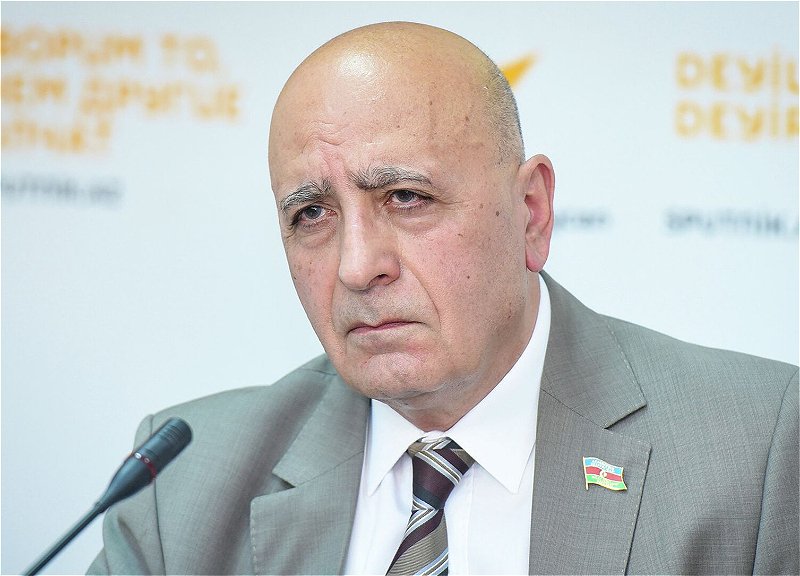
A senior Azerbaijani analyst says the quickest route to a durable peace with Armenia is the simplest one: sign the treaty now and move it through ratification, rather than waiting on constitutional rewrites or shifting politics in Yerevan.
Rasim Musabekov argues that signature triggers the legal track – Constitutional Court review and parliamentary ratification in Armenia – making any future reversal far harder.
If the Armenian government truly sees no constitutional obstacle to recognizing territorial integrity and foregoing claims to Karabakh, he says, it should prove it in law.
On the most contentious issue – the route linking mainland Azerbaijan and Nakhchivan – Musabekov is pragmatic: the name matters less than the security and continuity of the connection.
Baku is not insisting on “extraterritoriality,” he says, but on a reliable and unimpeded passage.
The immediate goal is to complete the rail link first, with road infrastructure to follow. Azerbaijan expects to reach the Armenian border with its construction by mid-2026, and Musabekov urges Yerevan to keep pace, noting that the 44-kilometer section on Armenian territory is an achievable engineering project rather than a political riddle.
Even without a formal treaty, signs of normalization are already visible: trade routes are reopening, civic delegations have resumed visits to Yerevan, and inter-parliamentary dialogue is being prepared.
According to Musabekov, this progress itself justifies speeding up the peace process. A ratified agreement would secure these gains and make them irreversible, preventing future political shifts from undoing what diplomacy has achieved.
The analyst also believes that Europe has a clear interest in helping rebuild this infrastructure, since it effectively opens a shorter and safer route from Europe to Central Asia via Türkiye and Azerbaijan.
“Baku can do it alone,” he said, “but rational participation from Brussels would accelerate the project and show that Europe wants functioning east-west links, not just declarations.”
Skeptical of performative regional summits, Musabekov calls for small, practical formats that deliver measurable results – moving freight faster, cutting costs, and enhancing security. In his view, the strength of peace will be judged not by the number of conferences held but by how smoothly trains and trucks move across the region.
In essence, Musabekov’s message is clear: the two neighbors should sign and ratify peace now, build the 44-kilometer link without delay, and let actions, not arguments, define the new era between Armenia and Azerbaijan.

