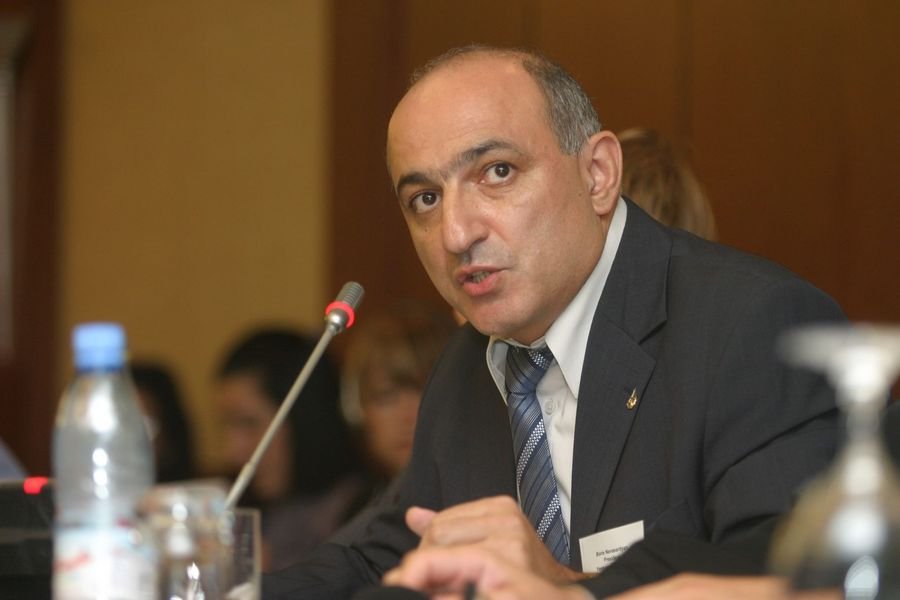
Speaking on CivilNet’s “Week in Review,” Boris Navasardyan, honorary chairman of the Yerevan Press Club and a veteran of Armenia-Azerbaijan dialogue efforts, said the meeting should be viewed as a “communication bridge” designed to feed concrete proposals into the formal, bilateral negotiations.
Navasardyan cautioned against instant verdicts, arguing the visit will be judged by practical outcomes-from steps that accelerate the signing of a peace agreement to measures that unblock regional communications and enable economic cooperation, including cross-border community projects.
Much of the working program was closed-door, he noted, and included a session with Armenia’s Security Council secretary. A short cultural program-walks in central Yerevan and a visit to the Matenadaran-rounded out the schedule.
Reaction in Azerbaijan’s public sphere was overwhelmingly positive, Navasardyan observed, reflecting a higher level of message consolidation there.
For Yerevan, he said, the real test is whether the strictly bilateral format-long favored by Baku-can deliver tangible results without outside brokers.
Humanitarian files featured prominently. Azerbaijan’s priority remains missing-persons cases, while Armenian participants focused on Armenian detainees held in Baku, whose legal situations differ.
Navasardyan advocated a differentiated approach-distinguishing between those with final sentences, those in ongoing proceedings, and considering factors such as age-aimed at decisions that build trust rather than inflame it.
Addressing criticism over who was at the table, he said the first round was not the moment to “strike poses.”
It was important to see through which interlocutors the Azerbaijani side is trying to communicate and to ensure that proposals can reach decision-makers. At the same time, he urged Armenia’s professional community to be self-critical about missed opportunities during previous crises and to broaden the format by involving sector specialists in economics, transport and logistics, ecology, and border trade-drawing on hard lessons from the 1990s, when NGOs and journalists sometimes helped resolve cases of hostages and POWs.
Navasardyan described the initiative as closer to “Track 1.5”-civil actors operating with state involvement-than pure Track 2. Unlike earlier, often confidential efforts, this process aims for maximum transparency, with initial discretion dictated mainly by security. As risks receded, openness increased, and he hopes that becomes the norm.
A reciprocal visit to Baku is both logical and desired by all ten participants, he added, though its timing depends on factors beyond their control. If this embryonic Track 1.5 can convert dialogue into measurable steps-humanitarian gestures, micro-projects, and procedural momentum toward a treaty-it will justify the buzz around a “first.”
If not, it will still clarify the limits of what bilateral engagement can achieve without mediators, and that, he argued, is useful knowledge in itself.