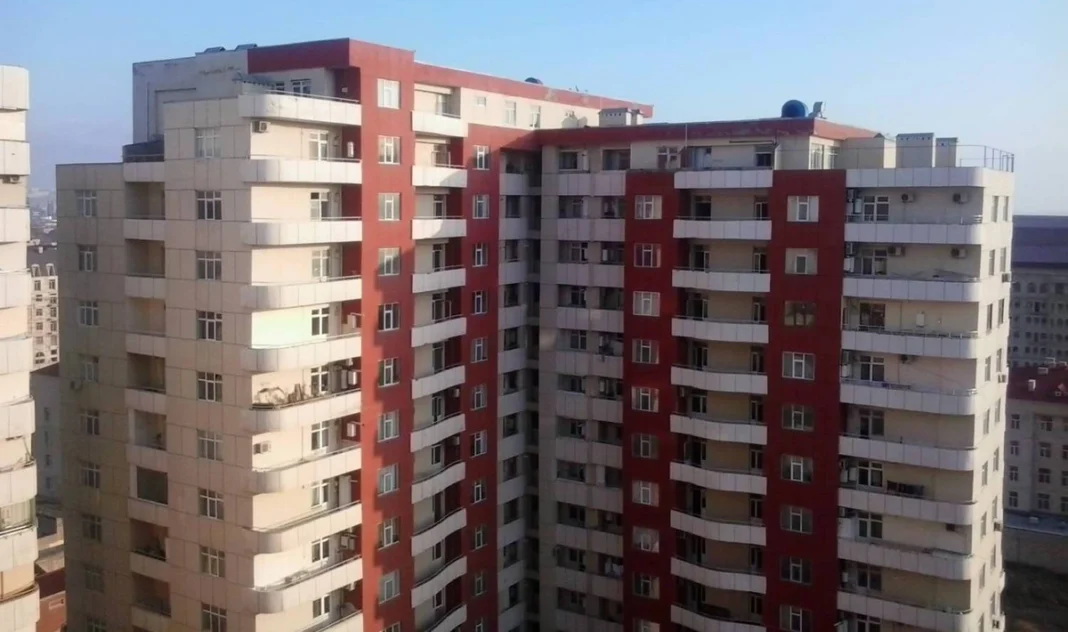
By Azerbaijan.US Editorial Board
For years, “affordable housing” has been one of the most overused phrases in Azerbaijan’s public discourse – repeated in government briefings, echoed in real-estate ads, and recycled in media headlines.
But for most citizens, it has become a hollow promise.
What the market calls “affordable” today is, in truth, unreachable for the majority of working families.
A Market That Rewards the Few
The Azerbaijani housing market no longer serves people looking for a home — it serves those looking for an investment. Apartments are treated as financial assets, not living spaces. Developers build to impress, not to house. Every new project is sold as “luxury,” every ad promises “modern comfort,” but the prices tell a different story.
—–
You May Like
Why Housing Prices in Baku Keep Climbing – Economist Explains
—–
In central Baku, the cost of even a modest two-room apartment now exceeds 300 000 manats, while in prime downtown districts such as Sabail and Nasimi, prices can easily surpass 400 000 manats – far beyond what a family earning the national median income could ever afford.
By contrast, in Yasamal or Khatai, similar apartments range between 190 000 and 240 000 manats, depending on proximity to the metro and building quality.
Recent listings show average prices at 3 000–4 500 AZN per m² in these areas, according to Bina.az and the Center for Economic Reforms and Communications.
By the Numbers: Housing Gap 2025
| District / Area | Price per m² (AZN) | 2-Room Apartment (70–80 m²) | Remarks |
|---|---|---|---|
| Sabail (Boulevard, Icherisheher) | 4 000 – 5 500 | 320 000 – 440 000 | Premium, sea view, scarce new supply |
| Nasimi (28 May, Torgovaya) | 3 200 – 4 200 | 260 000 – 340 000 | Central business area, strong resale |
| Yasamal (Elmlar, Inshaatchilar) | 2 800 – 3 600 | 230 000 – 290 000 | Mix of Soviet and new builds |
| Narimanov (Ganjlik) | 2 500 – 3 000 | 200 000 – 240 000 | Metro proximity, steady demand |
| Binagadi / 8th km / Bilajari | 1 700 – 2 100 | 130 000 – 160 000 | Dense, older stock |
| Khatai (Ahmadli, H.Aslanov) | 2 000 – 2 400 | 150 000 – 190 000 | Family-oriented, affordable middle tier |
| Masazyr / Khirdalan (Absheron) | 1 200 – 1 600 | 90 000 – 120 000 | Main zone for “budget” housing |
| Bina / Surakhani / Hovsan | 1 000 – 1 300 | 70 000 – 100 000 | Peripheral, weak infrastructure |
| Regional towns (Sumgayit, Ganja) | 800 – 1 000 | 60 000 – 80 000 | Low resale potential |
Key facts:
A 100 000-manat budget today buys only an entry-level flat in distant suburbs such as Masazyr, Bina, or Surakhani.
In central districts, the average 2-room apartment costs 250 000–400 000 manats, confirming that “affordable housing” has become an illusion.
Prices have risen by 45–50 % since 2020, while median household income grew by less than 15 % in the same period (State Statistics Committee, 2025).
The Myth of “100 000 Manats”
For many middle-income households, 100 000 manats is cited as a “budget” for home purchase. Yet property listings and realtor data contradict that belief.
Analysts estimate that such a budget now covers roughly 65–75 m² in older buildings or a single-room flat on the outskirts of Baku.
“Affordable housing,” in other words, means living farther away, with fewer amenities and weaker transport links.
Economic Growth Without Social Balance
Azerbaijan’s economy has indeed grown. Infrastructure has improved, skyscrapers have multiplied, and the skyline has transformed. Yet behind this visual progress lies an uncomfortable truth – the benefits of growth are not evenly shared.
The property boom has become a machine that transfers wealth upward: those who already own assets see them appreciate, while renters face higher costs and stagnant wages.
From Concrete Dreams to Concrete Walls
“Baku is growing” once sounded like optimism. Today it feels like irony. The city expands not as a community but as a construction site – towers of glass and concrete that reflect the wealth of a few and the frustration of many.
If housing continues to be treated as a commodity rather than a social right, Azerbaijan risks raising a generation priced out of their own capital – working, saving, and watching the skyline rise ever higher above their reach.