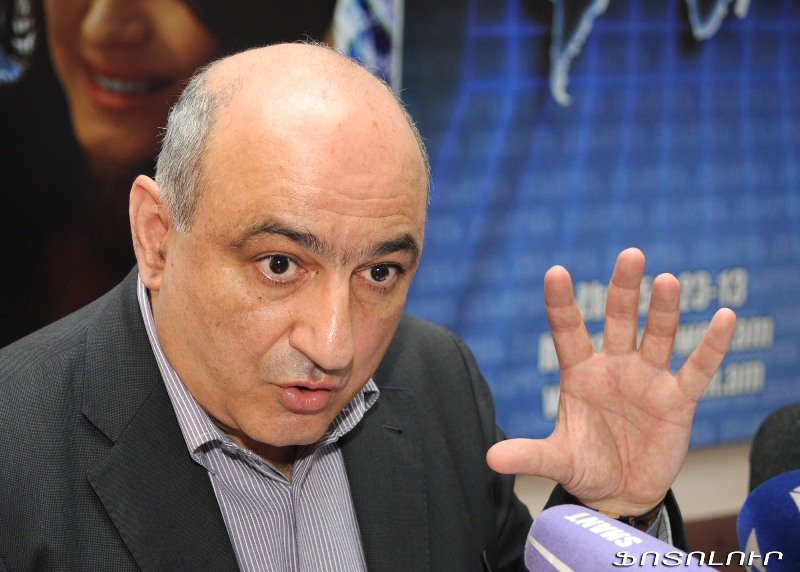
Armenia’s pledge to “unblock all transport links” with Azerbaijan will only work if it is reconciled with the country’s treaty obligations inside the Eurasian Economic Union, political analyst Boris Navasardyan argued in a Russian-language interview on Noyan Tapan.
Beyond political declarations, he said, the real bottlenecks are legal and technical: EAEU customs rules governing transit, the sharing of pooled customs revenues, and the operating regime of the TRIP rail segment through Meghri.
Unless those issues are pre-negotiated with Moscow and other EAEU capitals, Armenia risks launch-day friction-and even financial penalties-once trains begin to move.
Navasardyan framed TRIP as increasingly inevitable, but warned that inevitability is not the same as readiness. The EAEU customs code is a detailed, enforceable document; Armenia’s membership binds it to transit procedures that were drafted for states with contiguous borders and may not fully reflect Yerevan’s geographic specifics.
If partners deem Armenia non-compliant, they can legally withhold its share of the union’s pooled customs takings.
That threat, he suggested, should push Yerevan to codify exemptions and workflows-documentation, inspection points, custody of goods, and data exchange-before the Meghri section is commissioned.
Geopolitically, he described a split inside the Eurasian space: Russia is not enthusiastic about TRIP in its current form, having once expected to be the primary operator of the Meghri stretch under earlier trilateral understandings; Kazakhstan, by contrast, sees economic upside and backs the corridor.
With TRIP advancing, Moscow is unlikely to block it outright, he said, but will try to insert itself into the emerging arrangements.
That calculus is shaped as well by U.S. engagement: Washington’s shepherding of the broader Armenia–Azerbaijan settlement creates external constraints that discourage sharp reversals in Yerevan and Baku, even if it does not guarantee irreversibility.
On the stalled Armenia–Turkey normalization, Navasardyan shifted the focus from Baku to Ankara’s own timing.
Turkey is pouring resources into the Kars–Nakhchivan railway-double track, AC electrification-and has an interest in preserving that route’s competitiveness.
Opening the Armenia–Turkey land border too soon could divert freight toward the shorter Yerevan–Gyumri–Kars axis, undercutting Ankara’s investment case.
Azerbaijan, meanwhile, now prefers maximum diversification: flows via Armenia and Georgia as well as via Nakhchivan into Turkey.
In that sense, Baku is no longer the principal brake on an open border; Ankara’s logistics math may be.
At home, the politics around all this are heating up. Armenia heads toward parliamentary elections within months, and parties that once dismissed the Washington framework now largely speak within it, offering tweaks rather than rejection.
The campaign battlefield is shifting from geopolitics to criminality and corruption narratives-a playbook Navasardyan traces back to 2018-while the hard work of schedules, fees, and compliance sits in the in-boxes of bureaucrats. That dissonance between show and substance, he suggested, is where the process will be tested.
The message was less about grand strategy than about paperwork and patience. If Yerevan wants TRIP to start smoothly, it needs to lock down EAEU-compatible transit rules, agree customs data protocols, and set operating procedures with partners before the ribbon-cutting.
The politics may be loud, but the success or failure of unblocking will be decided in the fine print-and on whether the railways run on time without triggering legal tripwires the morning after.

