Political analyst Alexander Sobyanin says the North–South International Transport Corridor (ITC) – jointly developed by Russia, Azerbaijan, and Iran – plays a uniquely strategic role in global logistics, enabling the secure transport of high-value and sensitive cargo rather than bulk commodities.
Speaking to NEWS.ru, Sobyanin, who heads the Asia Development Fund and specializes in military logistics, noted that the corridor’s strategic purpose extends far beyond traditional trade:
“This route is especially needed for transporting particularly valuable goods linked to strategic industries and military supplies. Moscow and Baku are working together to strengthen the western branch of the North-South corridor for the benefit of all countries involved.”
Stay Ahead with Azerbaijan.usGet exclusive translations, top stories, and analysis — straight to your inbox.
He added that the corridor essentially revives an ancient trade route connecting Russia, the Caspian region, Persia, and India.
“Remember the 15th-century travels of Afanasy Nikitin – his route through the Caspian and Baku mirrored today’s North–South corridor, carrying precious furs from Rus and bringing silver and other metals back from Asia,” Sobyanin recalled.
Trilateral Agreements in Baku
Meanwhile, the governments of Azerbaijan, Russia, and Iran have agreed to intensify cooperation in transport, energy, and customs, according to a joint communiqué adopted following a trilateral meeting in Baku, Report.az said.
The talks were led by Azerbaijani Deputy Prime Minister Shahin Mustafayev, Russian Deputy Prime Minister Alexei Overchuk, and Iran’s Minister of Roads and Urban Development Mehrdad Bazrpash (Farzana Sadegh).
The document reaffirms earlier presidential declarations from August 8, 2016, and November 1, 2017, which laid the foundation for tripartite collaboration aimed at developing secure, efficient transport and energy corridors to stimulate regional economic growth.
The sides emphasized the importance of:
Expanding transit potential and accelerating infrastructure projects along the North–South corridor;
Increasing freight capacity to 15 million tons annually;
Establishing a working group to develop a detailed three-month action plan for implementation;
Creating a special joint task force on road transport with participation from customs, border, and transport agencies of all three countries.
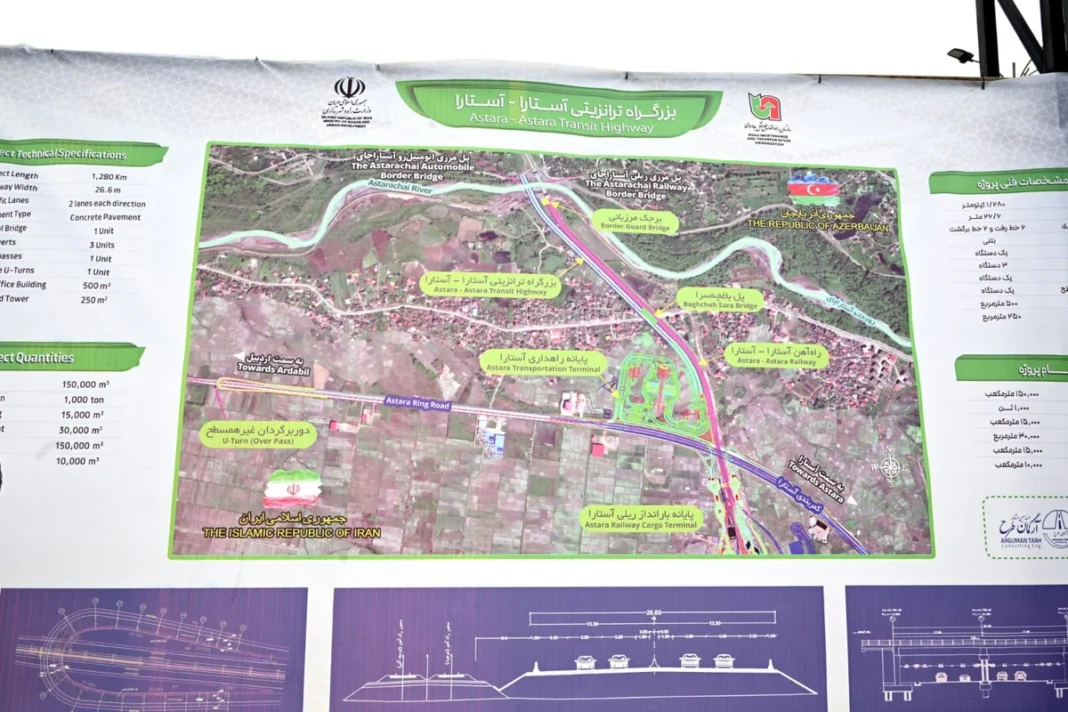
Participants also welcomed the signing of a customs cooperation protocol and stressed the urgency of completing the Rasht–Astara railway line and terminal – key components of the North–South network.
Another focal point was the construction of the Aghbend–Kelaleh bridge over the Araz River and its border crossing facilities, which will further strengthen trilateral connectivity. The communiqué also calls for simplifying border procedures, promoting digitalization of transport and customs operations, and continuing discussions on electric power grid interconnection among the three nations.
“The parties reaffirmed their commitment to expanding cooperation in transport, energy, and customs to enhance integration and ensure sustainable economic development across the region,” the statement concluded.

