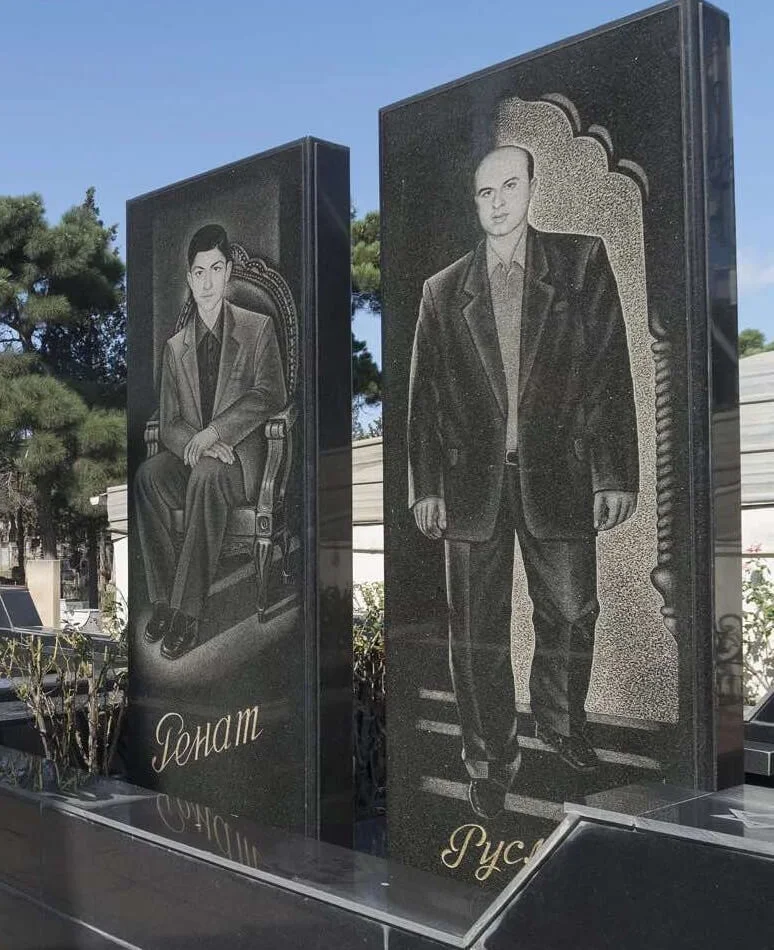
In Azerbaijan, the price of a final resting place is beginning to resemble that of urban real estate. Despite laws guaranteeing free burial plots, an expanding black market has turned cemeteries into zones of quiet profiteering – with spaces selling for anywhere between 100 and 30,000 manats, depending on location and “prestige.”
According to KhazarTV reportage, nearly all burial sites have been effectively privatized.
“Some plots cost 250 manats, but prices vary,” said one Baku resident. “If you want to be buried near your relatives, that’s 300. In central Baku, prices start from 1,000 or more – it’s outrageous.”
The situation outside the capital is little better. A resident of Mushfig settlement said graves there cost 350–400 manats. “Even at those prices, we have no choice – everyone must bury their loved ones somewhere,” he added.
By comparison, the official state fee for funeral services is 63 manats for Muslims and 49 manats for other faiths – a fraction of the amounts now circulating in the informal market.
A Legal Right Turned Into a Commodity
Under Azerbaijani law, cemetery land is public property. Yet, decades of weak oversight and bureaucratic loopholes have allowed caretakers, intermediaries, and even private individuals to monetize a basic social right.
Legal experts note that responsibility is blurred between municipal bodies and local religious administrations – a gap that fuels corruption and turns mourning into negotiation.
“The law is clear, but its enforcement is absent,” said one urban planner who asked not to be named. “No one wants to take responsibility, because the cemetery economy quietly feeds too many interests.”
Moral Lines Crossed
Theologian Agha Hajibeyli called the practice “a moral collapse.”
“To profit from death – to turn grief into business – is an act beneath human dignity,” he said. “What we are witnessing in some cemeteries is a national disgrace, not just a legal failure but a spiritual one.”
He urged the creation of new cemeteries and alternative burial grounds, warning that the state’s silence risks normalizing greed in sacred spaces.
Political Response and Public Distrust
MP Jeyhun Mammadov said the issue exposes deep flaws in how public land is managed.
“We must accelerate the transfer of cemeteries to municipal control,” he said. “Wealthy citizens are fencing off entire sections for family use, effectively privatizing public ground.”
However, critics argue that parliamentary concern has come too late. The informal cemetery market has operated openly for years, often with the quiet knowledge of local authorities. Efforts to legislate against it have repeatedly stalled – a reflection, analysts say, of institutional inertia and lack of political will.
A Deeper Crisis of Governance
Experts see the scandal not as a one-off abuse but as a symptom of a deeper dysfunction – where even public death is managed through private deals.
Sociologists warn that when rights as basic as burial become transactional, public faith in the state’s moral authority erodes.
“The problem is not just economic,” said one commentator. “It’s the idea that dignity itself has a price – and that the state is willing to look away.”
In a country where the right to a decent burial is guaranteed by law, the persistence of an underground cemetery market raises uncomfortable questions about accountability, ethics, and the quiet commercialization of public space.