By Azerbaijan.US Editorial Board
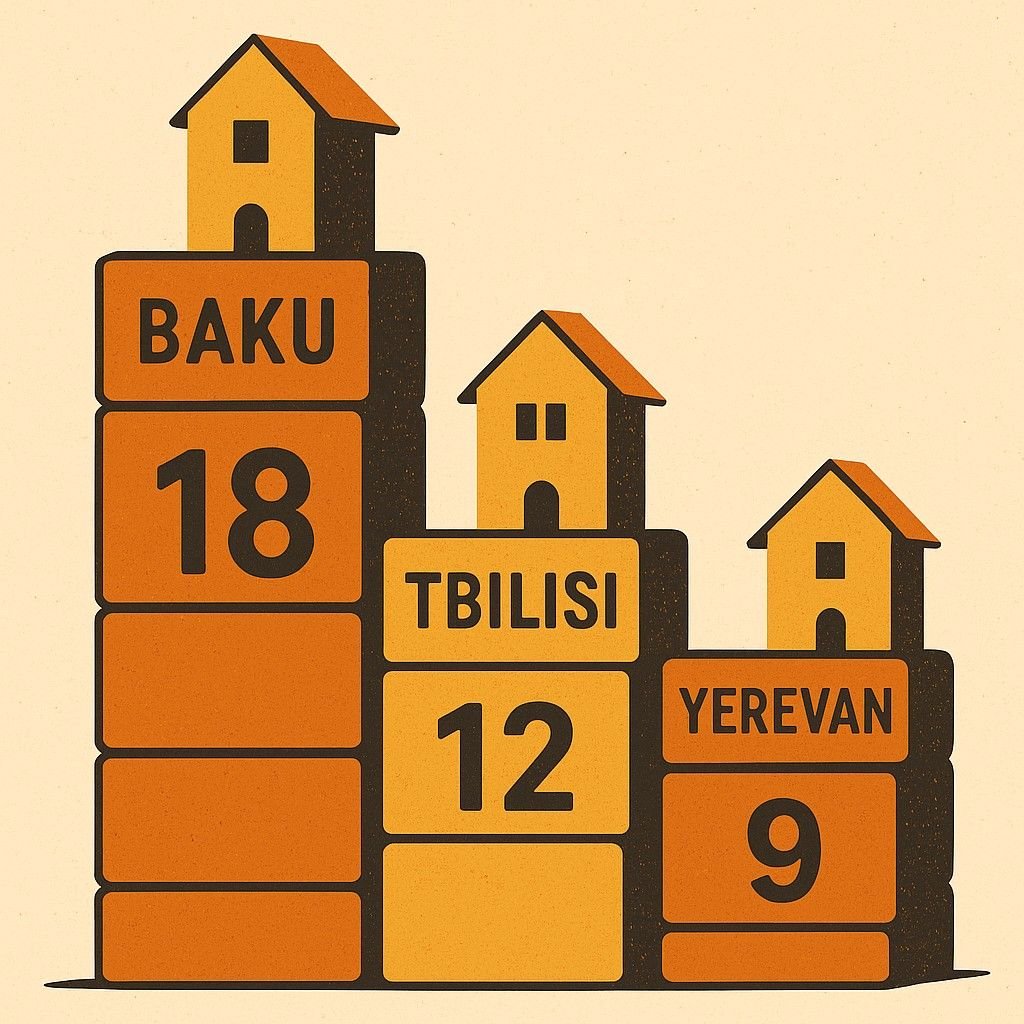
How long would you have to work to own an apartment in your city? In Baku, the answer is sobering: 18 years of saving every manat of your salary. That’s not paying rent, not buying groceries, not living at all – just stacking up income against the price of a roof over your head.
This figure, released in a new report by the Central Bank of Azerbaijan, paints a stark picture of the capital’s housing affordability crisis. Even more troubling is that for many families, the 18-year estimate is an optimistic calculation. It assumes an uninterrupted career, no unemployment, no medical bills, no inflation shocks – conditions that few can realistically maintain.
Rent vs. Reality
Baku’s rental market is just as unforgiving. The average monthly rent now stands at 883 manats ($520). For landlords, that means an apartment would pay for itself in 22 years of rent. For tenants, it means a growing portion of household income swallowed by housing costs.
Meanwhile, average wages have climbed – by 8.4% in the first half of 2025, reaching 1,375 manats ($810). But the rise in salaries lags far behind the speed of property inflation. For ordinary families, real estate remains a dream that runs faster than they can chase.
Looking Over the Fence
Compare this to Azerbaijan’s neighbors. In Tbilisi, an apartment costs the equivalent of 12-14 years of wages; in Yerevan, it’s 9-11 years. Both capitals struggle with affordability, but their ratios are less punishing than Baku’s. Despite higher reported wages in Azerbaijan, the gap between income and property prices keeps widening.
So why is Baku more expensive? Part of the answer lies in speculative demand: apartments are often bought not to live in, but to store wealth. Developers build for investors, not for residents. Credit is expensive, and mortgage terms exclude much of the middle class. Add limited land supply in central areas and state-backed megaprojects, and the result is an overheated market out of sync with real earnings.
Policy Blind Spots
The government proudly points to infrastructure projects and GDP growth, yet fails to address the inequality embedded in housing. Official strategies often frame homeownership as a matter of personal discipline – save more, spend less – ignoring structural barriers. Meanwhile, young professionals postpone marriage or start families under parental roofs, not because they lack ambition, but because they cannot afford independence.
What’s missing is a clear housing policy aimed at affordability: subsidized mortgages for first-time buyers, incentives for developers to build mid-range apartments instead of luxury towers, and tighter regulation of speculative purchases. Without these measures, Baku risks drifting into a two-tier city – one for property investors and elites, another for tenants stuck in perpetual rent.
From Dreams to Dead Ends
Once, Azerbaijanis dreamed of catching up with Europe. Today, many quietly hope for conditions as modest as those in Tbilisi or Yerevan. That shift in aspiration is telling. It reflects not just the weight of rising prices, but also the shrinking confidence that hard work will ever translate into homeownership.
Baku’s skyline keeps rising, but for the average citizen, the doors to those towers remain closed. And unless housing becomes a genuine priority in national policy, the Central Bank’s 18-year estimate will soon look like a luxury many can no longer afford.