Baku, September 23, 2025
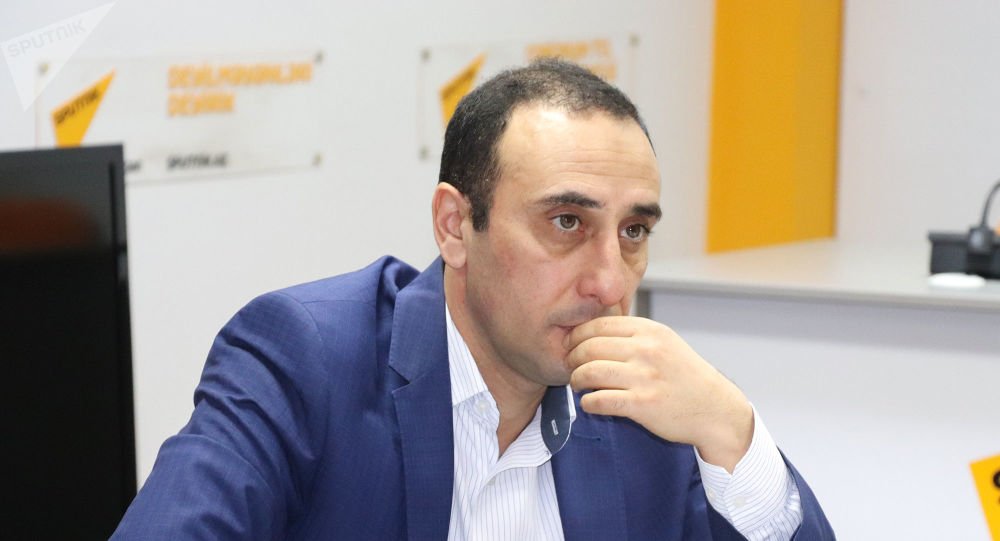
Rizvan Huseynov, director of the Center for Caucasus History and author of “Azerbaijan and the Armenian Question in the Caucasus”, told the program Modern Conversation with Rasim Babaev that Prime Minister Nikol Pashinyan’s latest statements mark a rare and courageous break with entrenched Armenian narratives.
Speaking ahead of his book’s presentation at the Baku Expo Center on October 4, Huseynov said Pashinyan has openly acknowledged his own role in fanning tensions.
“He admitted that his slogan ‘Karabakh is Armenia’ triggered the second war. For the first time, an Armenian leader is criticizing not only society but himself. That shows courage,” Huseynov said.
According to him, the Armenian prime minister is attempting to “pull his people out of a cursed circle” fueled for generations by what Huseynov described as a three-headed force: the Armenian Church, the diaspora, and nationalist political parties.
“The Church creates the myths, the diaspora pays to spread them, and the political organizations implement them. This has repeatedly led Armenians and their neighbors to tragedy. If Pashinyan can stop it, that will be the Armenian people’s greatest victory,” Huseynov argued.
Education and false history
Huseynov noted that Armenian schoolchildren are still taught that Mount Ararat lies within Armenia’s borders, reflecting what he called a “toxic” education system that perpetuates territorial claims on all neighbors.
Regional dynamics and global shifts
The historian placed Pashinyan’s repositioning in the context of wider geopolitical changes. He pointed to:
Britain’s growing activism in the South Caucasus, raising ties with both Baku and Yerevan to strategic partnership levels;
U.S.–U.K. coordination, including President Trump’s recent meetings with King Charles II;
Strengthened trilateral cooperation among Azerbaijan, Turkey, and Pakistan, which Huseynov described as “a new axis of regional security”;
Turkmenistan’s gradual shift toward Caspian-based export routes via Azerbaijan and Turkey, bypassing Russia and Iran.
He also highlighted that the Organization of Turkic States (OTS), now chaired by Azerbaijan, is proving far more effective than the Arab League, with concrete projects expected at the Gabala summit in October – including timelines for the Trans-Caspian pipeline and the Zangezur route.
Signals of normalization
Huseynov underlined several “markers” of real progress: Armenian intelligence chief Andronik Simonyan’s current visit to Baku, ongoing U.S.-brokered contacts, and even cultural exchanges.
“In Kazakhstan, an Azerbaijani judge gave Armenia’s contestant the maximum 10 points, and the Armenian judge returned the gesture to Azerbaijan’s singer. These are small but powerful signs,” he said.
Huseynov added that the establishment of diplomatic relations between Pakistan and Armenia, reportedly coordinated with Baku, shows that “Armenia is moving in the right direction.”