Online, September, 21, 2025
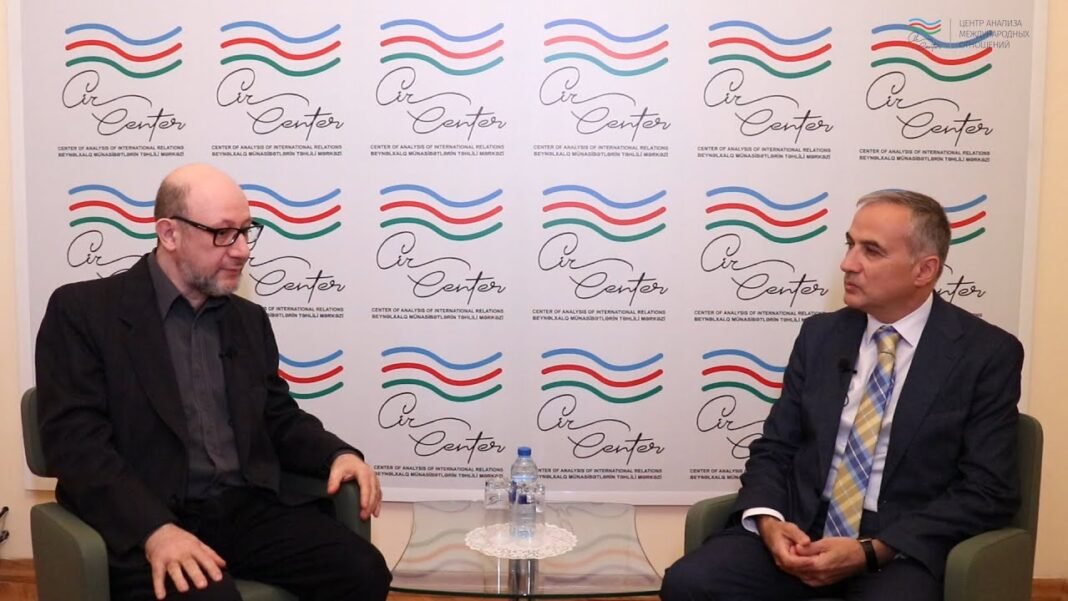
Echo Baku host Movsun Hajiyev and analyst Albert Isakov on Karabakh’s exodus, memory, and the chances for coexistence — On the second anniversary of the end of the occupation of Azerbaijani lands
Echo Baku marked the anniversary with a searching conversation between host Movsun Hajiyev and blogger–researcher Albert Isakov, focused on one unresolved question from the September 19–20, 2023 operation in Karabakh: could ethnic Armenians have remained in their homes as citizens of Azerbaijan?
Hajiyev opened by congratulating viewers and introducing Isakov as a long-time, well-known voice across both Azerbaijani and Armenian audiences. What followed was a frank, sometimes uncomfortable exchange about identity, propaganda, responsibility, and whether durable peace can take root after decades of separation.
The central question: staying or leaving?
Asked directly whether Karabakh’s Armenian residents might have stayed, accepted Azerbaijani documents and become full members of Azerbaijan’s civic community, Isakov’s answer was “no.”
In his reading, the mass departure was not only about fear or physical security; it reflected a principled refusal to live within Azerbaijan alongside Azerbaijani neighbors after three decades of enforced separation.
He cited several details from September 2023 to argue the exit was organized and encouraged from the Armenian side: buses sent to the region, fuel requested “for utilities” but distributed to departing families, and Baku representatives’ outreach aimed at persuading residents to remain.
He also pointed to a social-media poll by former separatist deputy Alyosha Gabrielyan asking whether people would return to Karabakh under Russian guarantees and with Russian citizenship; the “yes” responses, Isakov argued, suggest the objection was to Azerbaijan’s jurisdiction, not merely safety conditions.
“History without the subjunctive”: why mindsets matter
Isakov repeatedly returned to the power of memory. He was 14 when the late-1980s conflict began; many younger people on both sides, he said, grew up without ever meeting the “other” in everyday life, forming their impressions through the internet and wartime narratives. That matters: reconciliation depends not only on institutions but on lived experience.
He traced what he views as deep ideological roots of the crisis to strands of Armenian nationalism and diaspora intellectual currents that, in his telling, long pre-dated the late-Soviet rallies and later separatist structures.
He criticized the slogan “Artsakh is Armenia, period,” recalling how such claims hardened positions and, in his view, helped set the stage for tragedy.
At the same time, Isakov stressed he rejects ethnic animus. He noted his own mixed background (an Armenian mother) and said he avoids derogatory language, arguing his critique is political and structural rather than aimed at ordinary people.
A generation shaped by the internet – and by negativity
Both guests explored how unfiltered online content has saturated public debate with graphic imagery, rumor and rage, complicating any “post-conflict” reset.
The Soviet-era “friendship of peoples,” Hajiyev suggested, was partly an enforced ideal that suppressed open talk about earlier traumas; when the lid came off, pent-up grievances surged. Today’s always-on feeds, Isakov added, keep negative content at the top of the algorithmic stack, making it harder to cultivate patience, nuance, or empathy.
The “balovanniye” effect: privilege, dependency, backlash
Isakov described Karabakh Armenians as having been elevated and subsidized for decades by Yerevan and the diaspora – “the favored child,” as he put it – with significant resources directed their way. That status, he argued, created expectations and isolation.
When the ground shifted after 2020 and especially in 2023, the same community suddenly found itself “the scapegoat” in Armenian politics – criticized by some in Armenia and, he said, left to absorb the consequences of choices made far away.
Could coexistence have worked?
Pressed on whether coexistence inside Azerbaijan was ever realistic in 2023, Isakov remained skeptical. He said many respondents openly rejected living alongside Azerbaijanis even under hypothetical outside guarantees – a sign, to him, that mindsets must change before any durable, voluntary return can be discussed.
Hajiyev, who voiced sympathy for civilians uprooted “for their ethnicity rather than any crime,” asked a harder follow-up: how many “Karen Avasanyans” might emerge – a reference to a recent arrest after grenade attacks – if people who reject coexistence were to return? Neither guest offered a numeric answer; the implication was that security, law, and civic culture would have to come first in any future scenario.
What peace requires
If the immediate question produced bleak conclusions, the broader conversation sought paths forward:
Demythologize the past. Isakov argued for confronting the history of mobilization, slogans and decisions that led to war – not to relitigate endlessly, but to stop repeating scripts that turn people into instruments of grand narratives.
Rebuild human contact. Both guests stressed how few younger Azerbaijanis and Armenians have everyday experience with one another. Long-term peace, they suggested, will require ordinary, low-drama interactions: study, trade, culture, sport – not as a panacea, but as a counterweight to online vitriol.
Set realistic expectations. Hajiyev pushed back on the notion that “trade alone will heal everything,” calling that reductionist. Isakov agreed: rule of law, equal treatment, and civic dignity are preconditions, not by-products.
Separate people from projects. Isakov condemned political movements that speak “in the name of the people” while sacrificing actual people – and urged future leaders, on all sides, to place individual safety and rights above symbolic victories.
A difficult but necessary conversation
Both men acknowledged that pain, loss and anger will not vanish on a timetable. The exodus of 2023 and the thirty years that preceded it left deep marks on families from Baku to Yerevan to Stepanakert/Khankendi. But they also insisted that peace is not the absence of questions; it is the willingness to keep asking them without returning to violence.
Hajiyev closed with a familiar benediction to viewers: peaceful skies for Azerbaijanis and Armenians alike – and a clear line for the future: no more “heroes” made by grenades.