September 16, 2025
By Anton Chablin, PhD in Political Science, Head of the Analytical Center “Accents.”
The Biden administration—rebranded under Donald Trump’s return to office—has promoted with great fanfare the “Trump Route for International Peace and Prosperity” (TRIPP), a transit corridor meant to link Azerbaijan and Armenia with Turkey.
In parallel, Ankara has broken ground on the Kars – Dilucu railway, designed to anchor the western end of this route and connect directly into Anatolia. Together, the two projects symbolize ambitions to reshape Eurasian logistics and position the South Caucasus as a pivotal hub of the New Silk Road.
Yet the corridor, often referred to as the Zangezur Corridor, remains mired in geopolitical and geoeconomic uncertainty.
A Long and Troubled History
The idea traces back to Soviet times, when the Zangelan – Nakhchivan railway passed through Armenia’s Syunik region. It was dismantled after the outbreak of the First Karabakh War in 1992, leaving Azerbaijan’s exclave Nakhchivan cut off from the mainland. Since then, restoring a direct link has been a central strategic goal for Baku.
Following the 2020 war, a Russia-brokered ceasefire envisioned reopening regional transport routes. But Yerevan has resisted, fearing the loss of sovereignty in Syunik and raising alarms over projects such as the proposed “Gegharkunik – Syunik Republic,” floated by Azerbaijani activists.
Azerbaijan and Turkey Push Ahead
Baku has pressed forward regardless. Construction of the Horadiz – Agbend railway is nearly two – thirds complete, alongside a new highway funded and built largely by Turkish firms. Ankara, for its part, is investing 2.8 billion dollars into the Kars – Dilucu line, expected to cut travel times and create up to 10,000 jobs in eastern Turkey. Turkish leaders frame it as nothing less than a “bridge between Asia and Europe.”
Together, these east – west “approaches” would form the backbone of TRIPP. Without an open corridor through Armenia, however, they risk becoming stranded infrastructure.
Competing Routes and Regional Resistance
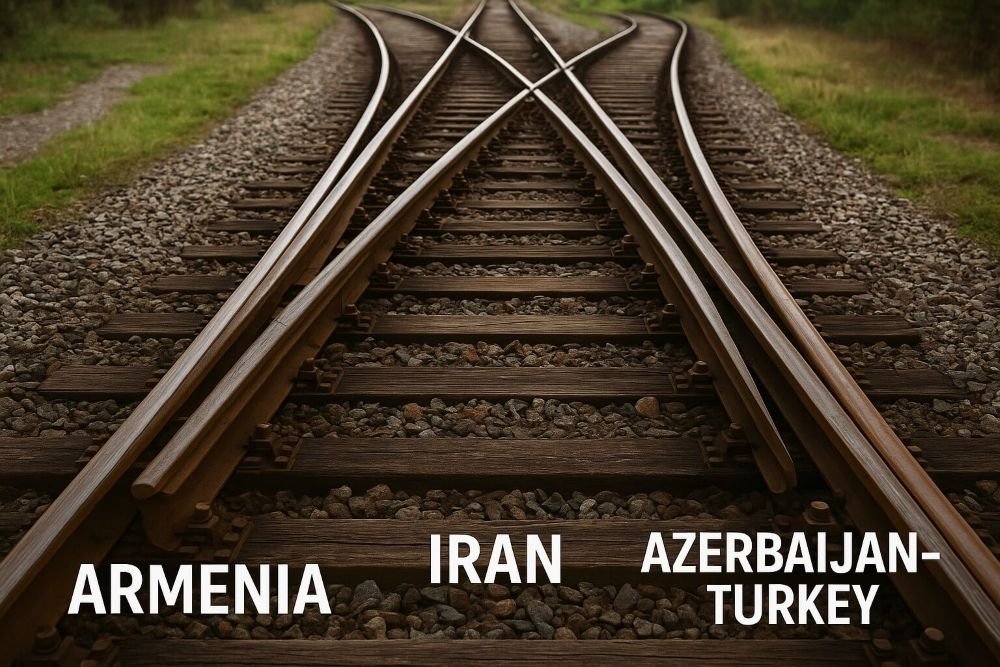
Armenia has floated reviving the Ijevan–Gazakh railway, a northern alternative that would bypass Syunik entirely and reconnect with Russian rail networks via Yerevan. Iran has its own vision: reviving the Aras Corridor through its East Azerbaijan province, giving Tehran a stake in east–west flows. Both Yerevan and Tehran view Zangezur with suspicion. For Armenia, it means pressure on sovereignty; for Iran, potential isolation.
Iran’s unease is not new. In 2021, tensions flared when Azerbaijani checkpoints restricted Iranian truckers on the Goris – Kapan highway. Tehran now frames TRIPP as a U.S.-backed attempt to cut it off from the Caucasus and tighten sanctions.
Washington’s Gamble
The U.S. plan foresees a 99-year lease for a private American consortium to manage infrastructure along the corridor inside Armenia. Though Washington has not pledged security guarantees, the symbolism of a long – term American footprint has already triggered alarm in Moscow and Tehran. Both see it as a direct challenge to their regional influence.
For Yerevan, the dilemma is stark. Prime Minister Nikol Pashinyan has reassured Iran that Armenia will maintain full sovereignty over any corridor, with customs and border controls intact. Baku, by contrast, envisions a free-flowing route to Nakhchivan without Armenian oversight. The only possible compromise – transit fees paid by Azerbaijan – may not satisfy either side politically.
The Political Clock
Ultimately, the corridor’s fate hinges on the still-unratified peace treaty between Armenia and Azerbaijan. The text was initialed in Washington but faces hurdles: Baku demands constitutional amendments erasing references to Nagorno – Karabakh, while Pashinyan, wary of domestic backlash, may delay until after Armenia’s 2026 elections. If the opposition prevails, the deal could collapse entirely.
Until then, the Zangezur Corridor – and Trump’s TRIPP vision – remains more rhetoric than reality.