Baku/Ankara/Yerevan, September 15, 2025
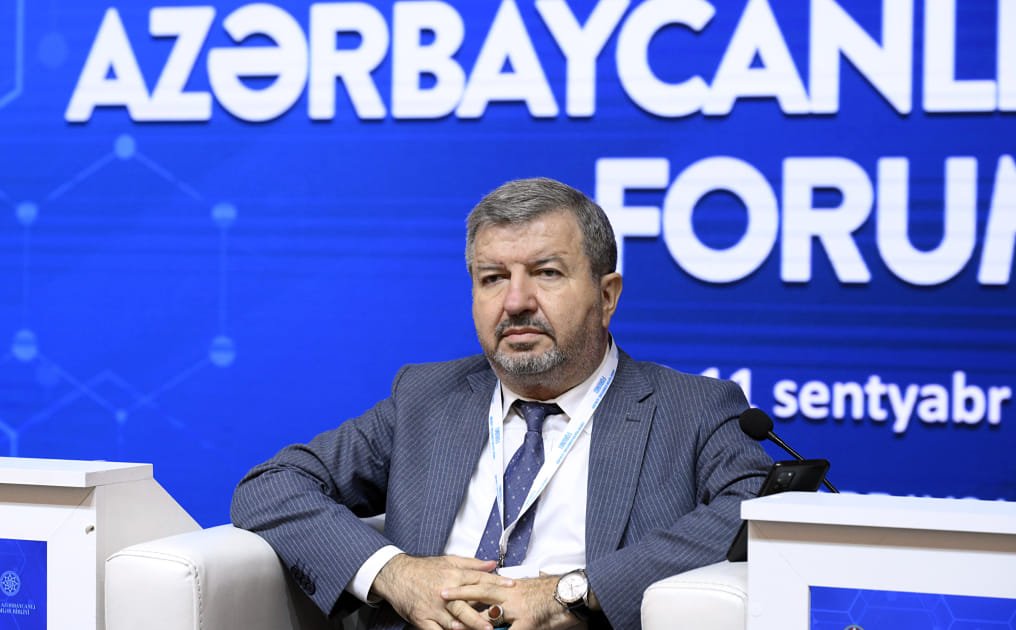
Political scientist Prof. Toghrul Ismayil, head of the Department of Political Science and International Relations at Kahramanmaraş Sütçü İmam University, offered his assessment of the recent Khankendi incident and broader regional dynamics in an interview with Daily Europe Online.
Khankendi Attack
Ismayil said the armed attack in Khankendi cannot be linked to either Azerbaijani or Armenian state security services, stressing that neither side benefits from destabilization at this stage.
Instead, he described the assault as a premeditated act linked to revanchist circles in Yerevan, intended to undermine the ongoing peace process. He cited evidence of pre-hidden weapons and the attacker’s preparedness, calling it “a systematic step aimed at disruption.”
Peace Process and Zangezur Corridor
The professor noted that most terms of the transit route across Armenia – often called the Zangezur corridor – have already been agreed, with the remaining issue being the formal signature of a peace treaty.
He also welcomed Armenia’s recent decision to remove Mount Ararat/Ağrı Dağı imagery from official border stamps, arguing that the mountain lies in Türkiye and international toponymy should reflect that fact.
Israel, Gaza, and Talk of Turkey
Turning to the Middle East, Ismayil criticized Israeli Prime Minister Benjamin Netanyahu’s policy in Gaza, saying two years of military operations have neither eliminated Hamas nor improved Israel’s security.
He warned that discussions of a possible confrontation with Türkiye are “reckless,” pointing out that Türkiye, as NATO’s second-largest military power, is not comparable to smaller regional actors and any escalation would carry grave consequences.
U.S. Policy Under Trump
On U.S. foreign policy, Ismayil contrasted President Donald Trump’s second-term team unfavorably with his first-term appointees, calling the current lineup “less professional” and excessively focused on short-term economic gains.
He noted that European allies have constrained Washington’s harder-line proposals, while NATO has expanded and shifted more financial responsibility to Europe.